CapEx vs OpEx: How CIOs & CFOs Are Reshaping IT Spend

Reframing the IT Spend Equation
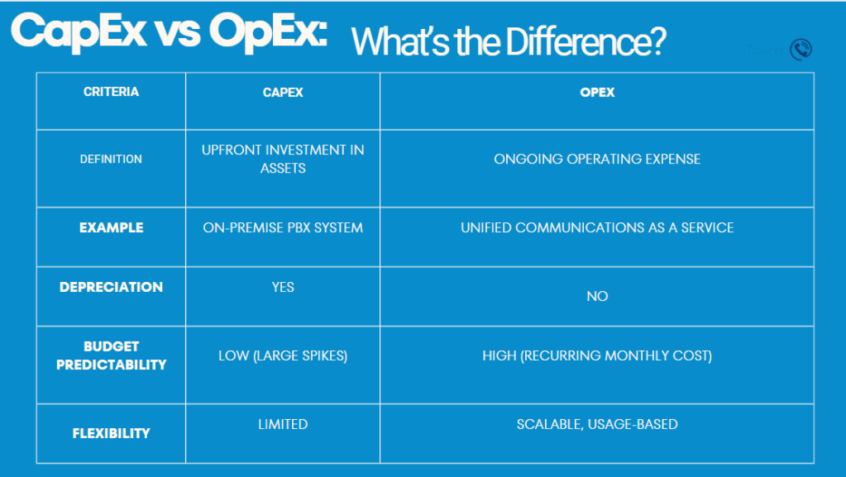
The shift from CapEx to OpEx is transforming how IT leaders manage budget, infrastructure, and innovation. As more organizations transition to OpEx models, the benefits—agility, cost predictability, and scalability—are becoming clear. Understanding the difference between CapEx vs OpEx is essential for any CIO or CFO navigating digital transformation.
Legacy approaches to IT investment no longer meet the demands of modern enterprise strategy. Organizations that continue to treat infrastructure as a capital asset are often left grappling with obsolete systems, unpredictable costs, and slow innovation cycles.
CIOs, CFOs, and IT managers are responding by shifting technology and telecom investments from CapEx (capital expenditure) to OpEx (operational expenditure). This isn’t a mere accounting move. It’s a business-critical transformation that offers agility, financial clarity, and long-term resilience.
Read why top finance leaders are rethinking technology investment models (McKinsey)
Why IT Leaders Are Choosing OpEx
1. Faster Time to Value with OpEx
Cloud-first and managed service models allow IT teams to deploy in weeks rather than quarters. This accelerates business outcomes and reduces time-to-value.
2. Predictable Budgeting Through OpEx Models
Monthly recurring costs improve financial forecasting and cash flow management. Stakeholders gain confidence in spend-to-performance alignment.
3. Built-In Scalability with OpEx Infrastructure
OpEx models allow organizations to scale resources dynamically. Pay only for what you need, when you need it.
4. Reduced Obsolescence Risk
Traditional CapEx-based infrastructure often requires costly “forklift upgrades” every 3–5 years, locking businesses into disruptive refresh cycles. OpEx models eliminate this by providing continual updates as part of the service.
Real-World Scenarios Driving the Shift to OpEx
-
Remote and Hybrid Work Models: Demand cloud-based communication and collaboration platforms that scale with workforce needs.
-
Compliance Requirements: Evolving regulations such as E911 compliance require telecom flexibility and responsiveness.
-
Cybersecurity Demands: Constantly evolving threats call for real-time protection, which is best delivered through managed security services.
Who Benefits from the Shift from CapEx to OpEx?
-
CFOs gain control and visibility into spend through streamlined reporting and reduced CapEx cycles.
-
CIOs enable their teams to focus on outcomes, not infrastructure maintenance.
-
IT Managers simplify operations and reduce vendor fatigue through managed solutions.
The Towner Advantage: Infrastructure Built for Strategy
Towner partners with forward-thinking organizations to modernize their IT and telecom environments—both technically and financially. We specialize in transitioning clients from CapEx-heavy systems to flexible, cost-effective OpEx models.
“Towner’s audit helped us uncover over $200K in redundant telecom contracts. Their roadmap gave us a clear path to reinvest that into scalable infrastructure.”
— Rodger Wink Director of IT, Regional Healthcare Network
Our Strategic Services Include:
-
Full-scope IT and telecom audits
-
Cloud-first migration planning
-
Managed service implementation
-
Unified billing and cost visibility
Explore how we help enterprises modernize telecom infrastructure ➝
Questions That Signal It’s Time to Change to OpEx
If you’re hearing any of the following, your IT spend model may be due for a realignment:
-
“Why are we maintaining infrastructure that no longer supports our goals?”
-
“Can we reallocate budget to innovation rather than hardware?”
-
“How do we make our IT costs more elastic without adding risk?”
Move from Cost Center to Value Engine with OpEx
Modernizing your IT spend model unlocks new levels of performance, transparency, and competitive advantage. Let Towner show you what’s possible.