
Structured Cabling for Exposed Ceilings: A Guide for Industrial-Style Offices

Industrial-style offices are back, and they aren’t hiding anything. As a result, open ceilings reveal every part of your cabling infrastructure, from exposed beams to visible ductwork and wiring. In these spaces, the ceiling itself becomes part of the design—and every cable is on display.
When structured cabling gets pushed to the end of the project, the whole space pays the price. What should look bold and modern ends up looking incomplete.
At Towner Communications, structured cabling and low-voltage infrastructure aren’t just utilities. In industrial-style environments, your cabling becomes part of the architecture. The GC, the facilities director, and the client will notice the difference immediately.
Why Traditional Cabling Methods Fall Short in Exposed Ceilings
For example, in conventional offices, drop ceilings handle most of the visual cleanup. Acoustical tiles conceal the HVAC runs, conduits, and cabling that keep the building operating.
Common support systems include:
- J-hooks (48–60″ spacing)
- Cable trays (rigid, structural pathways)
- Conduits (used where plenum space is inaccessible post-construction)
In closed-ceiling environments however, these choices don’t impact the look and feel.
In exposed ceilings, they absolutely do.
Unaligned trays, mismatched conduits, and sloppy cable dressing stand out right away. In an exposed ceiling, every mistake stays on display.
Why Industrial-Style Offices Raise the Stakes
Industrial-style offices make mechanical and utility systems part of the design. That means:
- Cable pathways become visible architectural lines
- J-hooks and wire mesh trays can look unrefined
- Pathways must align with beams, ductwork and lighting
- Every cable routing choice is visually judged
- Aesthetic consistency matters just as much as function
Additionally, industry standards like BICSI and TIA emphasize “neat and workmanlike” installations, but industrial offices expect more. These spaces require engineered visual precision.
Source: BICSI N1 Standards (standards.globalspec.com).

Towner’s Structured Cabling Engineering Process for Exposed Ceilings
Ladder-Style Tray Systems
Instead of standard wire-mesh trays, we use ladder-style trays designed for exposed industrial ceilings. They create clean lines and a strong visual structure.
Pathways Designed Collaboratively With All Trades
We coordinate early with the electrical, mechanical, architectural, and construction teams to eliminate rework and ensure every pathway aligns with the project’s design intent. Our engineering follows the TIA-568 standards, which define performance requirements, topology limits, and testing criteria for commercial cabling.
Precision Cable Dressing & 90° Sweeps
We maintain:
- Uniform cable bundles
- Proper bend radii (4× cable diameter for Cat6A)
- Clean visual lines that mirror the architecture
These improve both performance and aesthetics.
Standards-Compliant, Warranty-Ready Installations
We follow:
- ANSI/TIA-568 (commercial building cabling)
- ANSI/TIA-862-C (intelligent building systems)
- ANSI/TIA-607-B grounding/bonding
- BICSI installation standards (N1, N2, N3)
Regional Expertise
Serving Missouri, Kansas, and the broader Midwest, we understand local codes, regional contracting practices, and the unique challenges of industrial-style renovations.
Technical Highlights Every Contractor Should Know
Conduit Fill Matters
More bends = fewer cables allowed.
Proper Bend Radius Protects Performance
Especially for Cat6A runs in open ceilings.
Grounding & Bonding Are Non-Negotiable
Per ANSI/TIA-607-B standards.
Horizontal Cable Length Limits
TIA-568 sets 90m limits for many commercial runs.
Pathway Alignment Affects Aesthetics
Even perfectly functional cabling can look wrong if pathways visually conflict with ductwork or beams.
Why Planning Matters: Examples of Improper Low-Voltage Installations
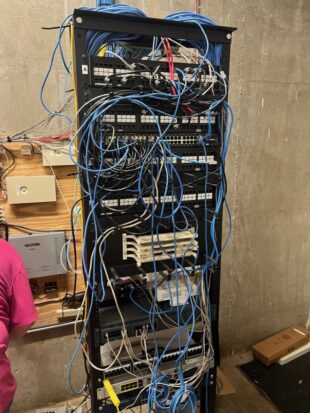
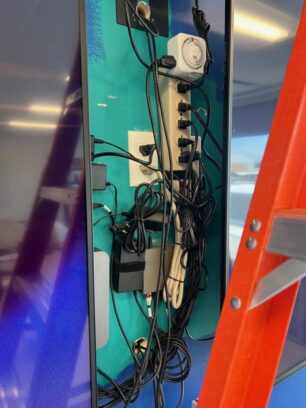
Common Mistakes to Avoid in Industrial Ceilings
Waiting to involve the low-voltage team
This leads to conflicts with HVAC, lighting, and fire systems.
Relying solely on j-hooks
J-hooks are fine for hidden ceilings but visually disruptive in open ceilings.
Poor labeling and documentation
Low-voltage requires clean labeling for troubleshooting and future growth.
Why Contractors & GCs Choose Towner
- Decades of structured cabling experience
- Business-critical telecom infrastructure expertise
- Local Midwest presence & WBE certifications
- RCDD and BICSI-certified team
- Coordinated pathway design for open ceilings
- Clean, aesthetic installations
- Full documentation, testing and warranty deliverables
Case Study: How Towner Engineered Structured Cabling for a 75,000 sq ft Industrial Office
During a 75,000 sq ft industrial-style office renovation in Kansas City (MO), Towner Communications joined the project at the design table—not after the dust settled. The GC called us in early to engineer the structured cabling and low-voltage pathways for an exposed-ceiling layout that left no room for shortcuts. We coordinated early with the electrical, mechanical, and architectural teams to lock in the pathway routes before construction began. That early alignment reduced an estimated 35% of the rework common in industrial buildouts and kept the project on schedule.
Our team installed more than 55,000 feet of Cat6A and fiber backbone on ladder-style tray systems that followed the building’s structural beams and open-ceiling layout. Every sweep, bend, and bundle aligned with the mechanical and lighting elements to create a clean, intentional look. The finished system meets all industry standards, supports high-performance communications, and fits the industrial design the client wanted—with no stray cables anywhere.
Pre-Build Checklist for Structured Cabling in Exposed Ceilings
- Pre-construction walkthrough with all trades
- Confirm exposed vs concealed ceiling areas
- Select cabling types (Cat6A, Cat6, fiber)
- Engineer pathway clearances
- Select tray vs conduit vs hybrid solutions
- Define cable dressing and aesthetic expectations
- Establish labeling and documentation plan
- Perform testing and provide as-builts
Frequently Asked Questions About Structured Cabling in Exposed Ceilings
In an industrial-style office, cabling isn’t something you hide — it’s something everyone sees. When structured cabling aligns with the architectural intention, the result is a workspace that performs flawlessly and looks intentional.
Towner Communications builds business-critical telecom and low-voltage infrastructure across Missouri, Kansas, and the broader Midwest. Ready to build an industrial-style space with cabling that matches the design? We’re here when you are.