MiVoice Business 10.5 as the Final Release for AX, CX II, and MXe III: Timelines and Risk
MiVoice Business 10.5 as the Final Release for AX, CX II, and MXe III: Timelines and Risk
Last reviewed and updated: January 2026
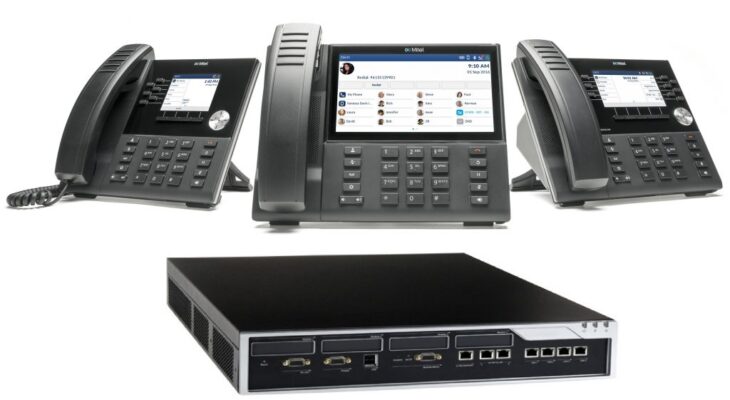
Mitel MiVoice Business (MiVB) continues to be an active platform supporting newer controllers, virtual deployments, and modern architectures. However, Mitel has formally announced that MiVoice Business 10.5 is the final release supporting the AX, CX II/CXi II, and MXe III/MXe III-L controller platforms.
This announcement does not signal the end of MiVoice Business as a product. Instead, it defines a clear boundary for legacy controller and device support, driven by hardware resource limitations, evolving security requirements, and long-term maintainability considerations.
This article explains what MiVoice Business 10.5 as the final release for AX, CX II, and MXe III means in practice, what risks emerge first, and how organizations can plan a controlled transition aligned with Mitel’s published timelines.
What This Article Covers
In this guide, we cover:
-
What it means for MiVoice Business 10.5 to be the final release for AX, CX II, and MXe III
-
Why risk increases gradually rather than all at once
-
Which components introduce risk first
-
How controller, endpoint, and application dependencies affect timelines
-
Support and repair timelines published by Mitel
-
How to plan a low-risk transition without forced decisions
Who This Guidance Is For
This analysis is written for organizations where communications reliability, compliance, and service continuity are critical.
Primary audiences include:
-
IT Directors and Infrastructure Leaders
-
Call Center and Operations Managers
-
CIOs, COOs, CFOs, City Administrators, and Superintendents
It is especially relevant for healthcare and senior care providers, K–12 education, higher education, city and county government, financial institutions, and distributed enterprises.
-
What Does “MiVoice Business 10.5 as the Final Release” Mean?
Mitel has designated MiVoice Business 10.5 as the last software release that supports legacy controller platforms, including:
-
AX
-
CX II / CXi II
-
MXe III / MXe III-L
After MiVoice Business 10.5:
-
No further major or minor software releases are planned for these controllers
-
New features will not be introduced on these platforms
-
Support is limited to published hardware repair and technical support timelines
MiVoice Business environments running these controllers may continue to operate, but they become progressively harder to support, secure, and modernize as platform and security requirements evolve.
Why Risk Increases Gradually, Not All at Once
A common misconception is that telecom platforms fail uniformly. In practice, environments running legacy MiVoice Business controllers experience asynchronous risk, where different components age on different timelines.
This occurs because:
-
Controllers reach software and resource limits before endpoints
-
Phones often outlive firmware and security compatibility
-
Contact center and collaboration applications impose stricter requirements than core voice
-
Security standards evolve independently of legacy hardware capabilities
The system may continue to function, but:
-
Features behave inconsistently
-
Upgrades introduce constraints instead of improvements
-
Vendor escalation paths narrow
-
Recovery options during outages become more limited
Delaying planning does not preserve flexibility—it reduces it.
What Breaks First in Legacy MiVoice Business Environments
Controllers
Controller hardware is the primary limiting factor.
Mitel has cited hardware resource limitations as the reason legacy controllers cannot support newer MiVoice Business features. AX controllers are limited to 500 MB of memory, while CX II and MXe III platforms have 1 GB, compared to newer platforms with significantly higher memory capacity.
As a result:
-
Many newer MiVoice Business features already exclude legacy controllers
-
MiVoice Business 10.5 represents the final supported release for these platforms
-
Architectural redesign becomes unavoidable over time
Once a controller reaches its limit, all dependent components inherit that constraint
Endpoints (Phones)
MiVoice Business 10.5 is also the last release that supports certain older phone models that do not meet current security requirements, including TLS 1.2.
When upgrading beyond MiVoice Business 10.5:
-
Unsupported legacy phones will not register on MiVoice Business 11.0
-
Existing phone programming is preserved to simplify transition
-
Devices are mapped to recommended 69xx-series equivalents where applicable
-
Unsupported phones can no longer be added
Mitel strongly recommends migrating to supported phone models before upgrading beyond MiVB 10.5.
Applications and Integrations
Most MiVoice Business environments depend on additional systems such as:
-
MiCollab
-
MiContact Center
-
Paging systems
-
Call recording
-
E911 and compliance tools
These applications frequently dictate the true transition timeline, often forcing change before core voice infrastructure fails.
Support and Repair Timelines for Legacy Controllers
Mitel has published the following timelines for MiVoice Business 10.5 on legacy platforms:
-
CX II and MXe III platforms:
End of Hardware Repair and Technical Support on December 31, 2028 -
AX platforms:
End of Hardware Repair and Technical Support on March 31, 2029
Mitel will maintain the ability to deliver critical operational patches until October 6, 2027. After that date, patches may be issued only at Mitel’s discretion. Newly discovered security vulnerabilities may not qualify for remediation, and security-conscious organizations are advised to accelerate transition planning.
What a Forced MiVoice Business Migration Looks Like
Organizations that delay planning often encounter a forced migration triggered by a contact center upgrade, operating system incompatibility, security requirement, or support limitation.
In these scenarios:
-
Timelines compress from years to months
-
Redesign decisions are made under pressure
-
Costs increase while service risk rises
-
Business continuity becomes harder to guarantee
These outcomes are rarely caused by bad technology. They result from delayed lifecycle planning.
Upgrade vs. Redesign: The Wrong First Question
Organizations are often asked whether they should upgrade MiVoice Business or replace it entirely. This binary framing oversimplifies a complex reality.
A more effective approach evaluates:
-
Which sites or functions can remain stable temporarily
-
Which components require redesign due to compatibility limits
-
Whether contact centers, remote sites, or regulated workflows need separate timelines
Unlike cloud-first platforms designed for continuous iteration, MiVoice Business was built around fixed controller architectures and versioned upgrades. This is why lifecycle planning matters more for MiVB than for newer communication platforms.
Most successful transitions combine targeted upgrades with phased redesign, rather than choosing one path universally.
Role-Based Risk of the MiVoice Business Phase Out
IT and Infrastructure Leaders
-
Unsupported configurations increase security exposure
-
OS and firmware constraints limit future change
-
Vendor escalation paths narrow over time
Call Center and Operations Leaders
-
Feature drift impacts agent productivity
-
Reporting inconsistencies affect staffing decisions
-
Peak-time failures carry reputational consequences
Executives and Financial Leaders
-
Forced migrations disrupt budget cycles
-
Compliance and audit exposure increases quietly
-
Service outages affect public trust and brand credibility
Building a Low-Risk MiVoice Business Migration Strategy
A controlled MiVoice Business transition follows a phased, risk-aware approach:
-
Validate the current MiVoice Business environment
-
Map controller, endpoint, and application compatibility
-
Align technical timelines with budget and operations
-
Phase changes with survivability and fallback planning
The objective is not speed. It is control.
Why the Right Telecom Partner Matters
MiVoice Business failures rarely stem from hardware alone. They result from poorly managed transitions that ignore interoperability, sequencing, and operational impact.
An effective partner:
-
Has deep Mitel expertise without platform bias
-
Understands regulated and high-availability environments
-
Designs migrations around survivability, not features
-
Aligns technical change with business continuity
This distinction matters most during lifecycle transitions.
Next Steps for Organizations Running MiVoice Business
Organizations running MiVoice Business should understand their controller limits, endpoint compatibility, and application dependencies before timelines are forced by upgrades, compliance requirements, or outages.
The goal is not rapid replacement. The goal is a deliberate transition that preserves operational stability and decision-making control.
This article will be updated as Mitel lifecycle guidance, controller support boundaries, and migration best practices evolve.
Downloadable Checklists and Cheat Sheets to help plan your MiVoice Business Transition
Frequently Asked Questions About Mitel MiVoice Business & Lifecycle Transitions
MiVoice Business 10.5 as the final release for AX, CX II, and MXe III establishes a clear and important boundary for legacy platform support. Organizations that understand this boundary early retain control over timelines, budgets, and operational risk.
This article will be updated as Mitel lifecycle guidance and support policies evolve.