In today’s digital age, small and medium-sized businesses (SMBs) need nimble communication solutions that scale with their growth. Cloud communications have become the secret sauce, offering flexibility and powerful features that empower businesses to stay competitive and agile.
Main Takeaways
Scalability and Flexibility: Cloud communications adapt effortlessly as your business grows, ensuring your infrastructure always fits your evolving needs.
Cost Efficiency: Pay only for what you use, saving significantly on upfront and maintenance costs compared to traditional systems.
Remote Work Enablement: Seamless collaboration across dispersed teams with features like video conferencing, virtual phones, and instant messaging.
Integrations: Advanced features like AI analytics and integrations with key business tools enhance productivity and customer service.
Disaster Recovery and Reliability: Keep your communications running, even during emergencies, with secure data storage and failover capabilities.
Data Analytics for Informed Decisions: Gain actionable insights from call volumes and customer interactions to refine strategies and support growth.
Scalability and Flexibility
With cloud communications, expanding to new users, offices, or features is a breeze. No more rigid infrastructure—just easy scaling to meet changing demands and support your growth.
Cost Efficiency
Traditional systems are costly, but with cloud communications, you pay as you go, managing budgets effortlessly while benefiting from the provider’s maintenance and upgrades.
Remote Work Enablement
Cloud communications enable remote work with ease, keeping teams and clients connected through virtual phone systems, video conferencing, and instant messaging.
Integrations
Integrate with your favorite business tools and leverage AI analytics, video conferencing, and more to streamline workflows and improve customer service.
Disaster Recovery and Reliability
Stay resilient during unexpected events with robust disaster recovery capabilities that keep your communications running, even in emergencies.
Data Analytics for Informed Decisions
Leverage cloud analytics to uncover insights that refine your strategies, optimize customer experiences, and align your communication with business goals.
Empower Your Business with Cloud Communications
Ready to supercharge your communications? Cloud communications provide the flexibility, cost efficiency, and powerful features SMBs need to thrive. Get in touch for a personalized consultation to discover how our solutions can be tailored to your business, driving scalable growth and success.
Lots of people are familiar with VoIP—Voice over Internet Protocol, which allows you to make affordable calls over the internet. For years, this technology has provided the benefit of low-cost, high-quality conversations.
Yet, there’s another technology that has become just as vital, particularly for businesses. Since 1996, Session Initiation Protocol, or SIP, has revolutionized the way VoIP is accessed, making it a staple in today’s tech landscape.
Considering a cloud-based private branch exchange using VoIP? You’ll probably need SIP trunking. Let’s explore the role of SIP trunk port numbers and determine how many SIP trunks you actually need.
Key Points:
Towner SIP trunking facilitates VoIP for both voice calls and multimedia communications.
With Towner SIP trunking, you gain access to unlimited business lines at a low cost because the system operates virtually.
The crucial SIP trunk port numbers are 5060 and 5061, which manage the majority of your VoIP communications; however, with Towner’s world-class support, managing these details becomes hassle-free.
What Is SIP, and What’s Its Role in VoIP?
VoIP was the breakthrough technology that made digital calling over the internet possible. However, there was a challenge in enabling these calls to connect across different systems and providers.
SIP technology provided the solution and has since become the standard for facilitating VoIP communications. Think of it this way: if a VoIP call is like a subway car carrying your messages, then SIP is the station and tracks that guide each car to its destination.
SIP manages the initiation of calls, maintaining the connection, and disconnecting calls when finished.
Moreover, SIP has enabled the integration of video and text messaging into your VoIP systems. This is why you can upgrade your cloud-based PBX into a comprehensive unified communications service without needing extra devices or hardware.
What Exactly Is a SIP Trunk?
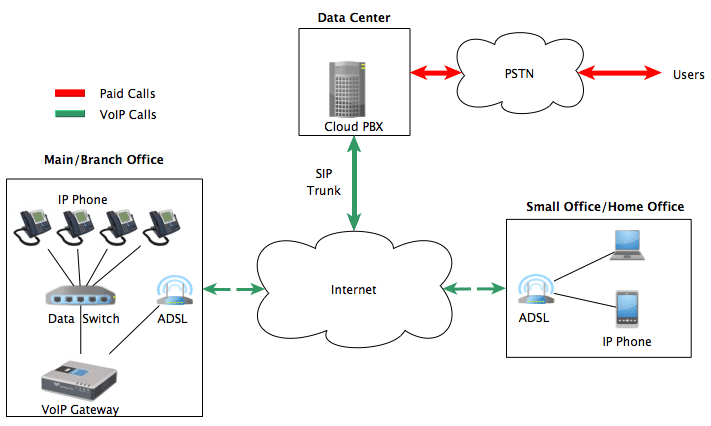
Trunking is the process that links your PBX lines both internally and with the external world, facilitating calls. Ever wonder where the term “trunk” originated? Historically, an analog PBX was connected to the outside world using a physical trunk device.
Here’s an easy way to picture it: Imagine a PBX as a tree filled with separate extensions or branches. These branches would connect to the outside world of public switched telephone lines through a trunk.
So, a trunk essentially acts as a central hub connecting a group of lines. In the past, due to the limitations of physical hardware, a traditional T3 trunk could handle only up to 28 lines. If more lines were needed, additional trunks were required.
However, the advent of SIP technology has revolutionized this setup. With everything being virtual, a single SIP trunk can support virtually unlimited lines.
How Many SIP Trunks Are Necessary for Your Business?
You might have already guessed the answer to this question: You only need one SIP trunk! This is because these virtual solutions allow you to host unlimited lines (or “channels”) on your system.
So, the real question becomes: How many channels do you need for SIP trunking?
Although the system is virtual, the calls, conferences, and messages your system handles are still transmitting data. Your provider manages this data securely from their data centers, which is why professional VoIP and SIP trunking services still come at a cost.
Additionally, consider that the number of channels and the volume of calls you manage will require adequate internet bandwidth to ensure smooth and clear connections. It’s wise to discuss your needs with your communications service provider to determine if you need to upgrade your internet to a service that can adequately support a business line.
What Is the Purpose of a SIP Trunk Port Number?
Talking about SIP port numbers can dive deep into technical jargon pretty fast. You don’t need to grasp all the details unless you’re an IT professional.
What’s important to know is that these ports are virtual pathways that manage the flow of data for various activities. The two main port numbers used for SIP traffic are 5060 and 5061.
Port 5060 facilitates the majority of your VoIP calls through quick, non-encrypted connections. In contrast, Port 5061 is designated for traffic that requires transport layer security.
Previously, knowing these port numbers was crucial for troubleshooting. However, with today’s advanced cloud-based VoIP business lines, these details are often handled by your service provider. They should provide 24/7 support to monitor your system and guide you through any troubleshooting steps as needed.
What Advantages Does SIP Trunking Offer?
If you’re still using a legacy PBX, you might be wondering if it’s worth making the switch to the cloud. Here’s why it definitely is:
Cost Savings: Virtual systems are generally cheaper to start with, and you won’t have to pay for extra lines. You can easily scale your system up or down as needed without additional costs.
Remote and Hybrid Work Capabilities: With a secure communications system that only requires internet access, you can maintain reliable communication with your team, no matter where they are.
Reliable, Future-Proof Technology: Your service is supported by multiple data centers through your provider, ensuring business continuity even during outages or disasters.
For more insights, consider the experiences of customers who have successfully transitioned to a cloud-based phone service.
Ready to Upgrade Your PBX to the 21st Century with SIP Trunking?
Towner SIP trunking simplifies the process of setting up a virtual business line more than ever before. Many companies can even have their cloud-based PBX up and running within just a few days, or sometimes even on the same day!
To tap into the advantages of SIP trunking, reach out to us at Towner. Whether you’re modernizing an old system or building from the ground up, we’ll help you boost flexibility and cut costs with a contemporary business phone service.
Customer service automation is an excellent tool to simplify processes and free up your team to concentrate on customer interactions. In fact, Gartner forecasts that by 2025, 85% of companies will ramp up their use of automation.
If you haven’t yet integrated automation in your contact center and communication strategies, you might be missing out. A key component of this automation is automated call routing.
Why might this technology outperform human operators in delivering personalized customer service? Let’s explore how automated routing functions and why it’s essential for your business.
Key Points:
An automated call routing system ensures calls are directed to the right agents in your contact center.
It operates on preset rules to assess, queue, and assign calls effectively.
Today’s contact center technology allows effortless setup and customization of your call routing system.
Implementing automatizations leads to more satisfied customers, reduced call abandonment, and a boost in team productivity.
Understanding Automated Call Routing: What It Is and How It Works
How Does Automated Call Routing Work?
The process of automated call routing involves three key stages:
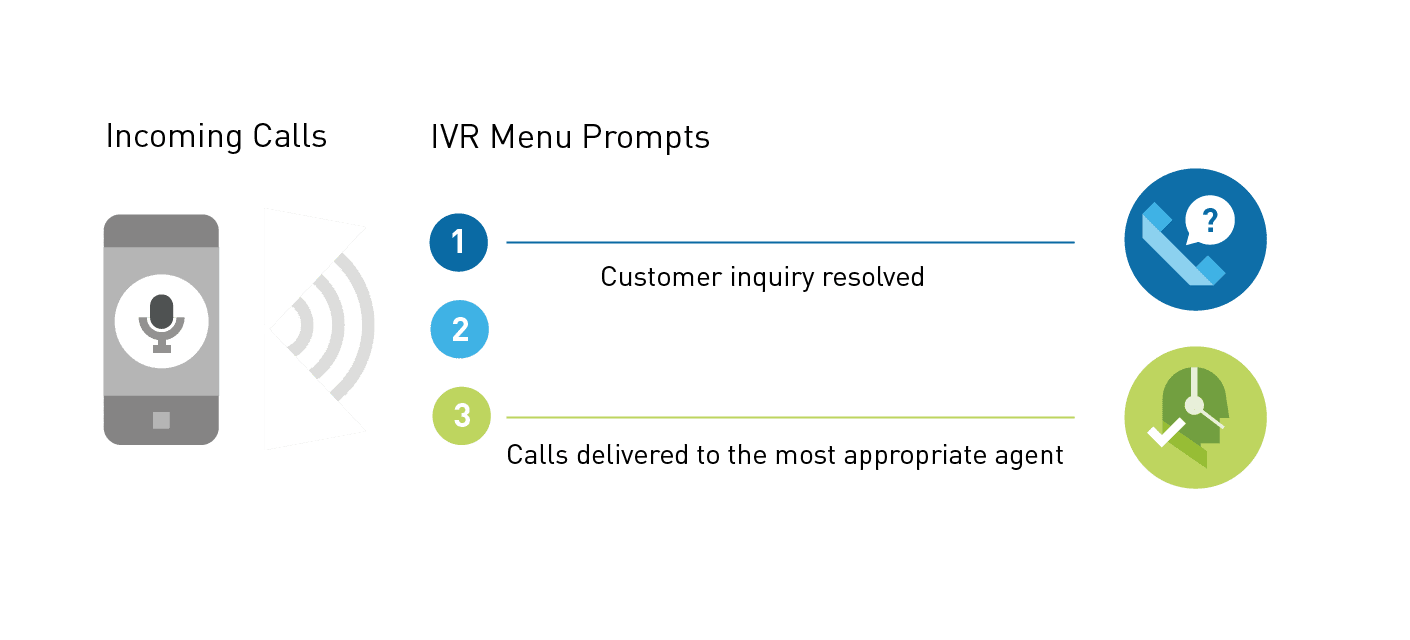
Call Qualifying First, your system has to determine your callers’ reasons for contacting you. The automated call routing service can do this with an interactive voice response system. With IVR, callers select an option from a menu using either their keypad or a vocal response. Additionally, you can also qualify calls with information from the caller ID, your customer relationship management software, and which business number the person called. For example, a call from a certain area code might indicate a caller is more likely to speak a specific language.
Call Queuing Once the call’s purpose is clear, the system places the caller in a relevant queue. They remain on hold until an agent from the appropriate department is available to take the call.
Call Distributing Automated call routing does more than direct calls to the right department. Using the information gathered in the qualifying phase, the system uses predefined rules to transfer the call to the agent best equipped to handle the caller’s needs.
What Types of ACR Rules Can You Implement?
The rules you establish dictate which agents receive calls, enabling you to deliver superior customer service.
Round-Robin Routing This method distributes calls evenly among your agents. Automated call routing software cycles through a list of agents, assigning each one a caller in sequence before starting the cycle anew.
Uniform Routing Similar to round-robin, uniform routing aims to balance the workload fairly. However, it directs calls to the agent who has been idle the longest or who has the least amount of talk time, helping to prevent team burnout.
Time-Based Routing This approach routes calls to agents in the same or a nearby time zone as the caller. Ideal for businesses serving national or international markets, it ensures that callers interact with agents who are likely awake and available.</p>
Skills-Based Routing Enhance your first-contact resolution rates with skills-based routing. This system routes calls to agents with the specific skills and authority needed to resolve more complex issues, reducing the need to transfer the call multiple times.
VIP or Relationship-Based Routing VIP routing prioritizes certain high-value customers, ensuring they receive prompt attention. Additionally, you can assign dedicated relationship managers to specific customers who merit extra care, optimizing service for those who contribute the most to your profits.
AI-Assisted Predictive Behavior Routing Leverage artificial intelligence to refine how calls are routed. Using machine learning algorithms, your system can predict which agent is best suited for a caller based on live and historical data. This insight also helps in recognizing and rewarding top-performing agents.
What Are the Benefits of Automatization
Automated call routing offers several key advantages for your organization.
Happier Customers Automated call routing helps resolve customer issues faster and enhances overall interactions with agents. This results in shorter wait times and often leads to higher customer satisfaction ratings.
More Productive and Efficient Workforce Automated call routing alleviates common problems like idle agents and overworked team members, which can lead to employee burnout and high turnover rates. By optimizing workflows with this technology, you can foster a more engaged and productive workforce.
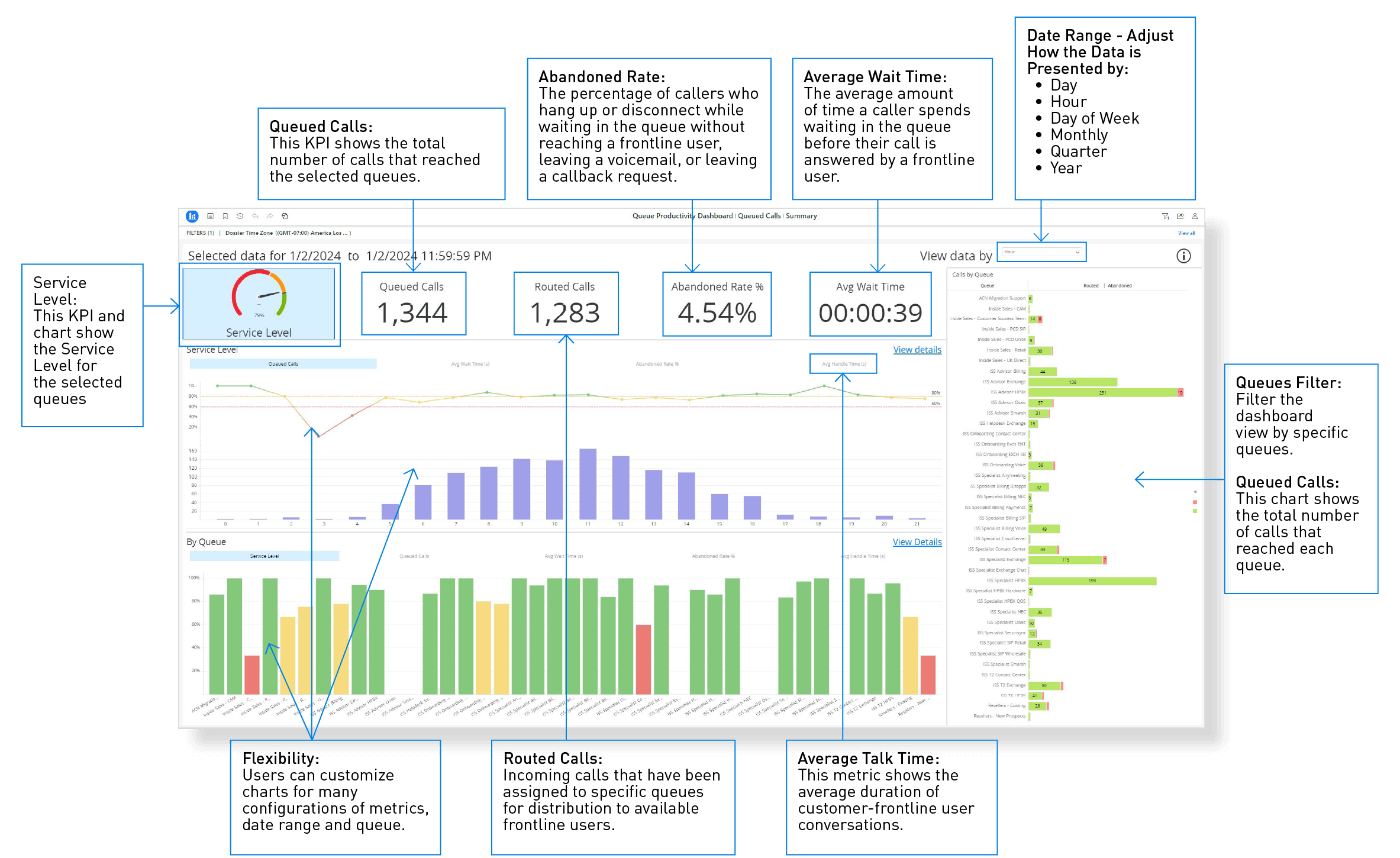
Additionally, your contact center software continuously records performance stats and provides an intuitive dashboard for easy analysis. Insights gained from this data help you refine your call routing rules and schedule your team more effectively, boosting overall operational efficiency.
Reduced Call Abandonment Rates Callers who hang up due to long wait times might seek services from your competitors. By enhancing the customer experience with automated call routing, you can decrease the number of abandoned calls, reduce the need for callbacks, and ultimately lower customer churn.
How Can You Quickly Implement Automated Call Routing?
Automated call routing comes packed with features your customers will appreciate. Thankfully, you don’t need to search for new software to integrate into your contact center to enjoy these benefits. Leading cloud contact center solutions already include advanced call routing capabilities.
Contact us to learn how Towner’s Contact Center simplifies the implementation of automated call routing.
In an era dominated by smartphones and digital communication tools, the question often arises: do desk phones still hold their ground in the modern business ecosystem? At Towner Communications, we believe the answer is a resounding yes. Desk phones, much like the classic vinyl record in the music industry, have evolved rather than become obsolete. Let’s delve into why and how desk phones continue to be an indispensable asset for businesses.
Key Takeaways:
Desk Phones Maintain Relevance: Despite the digital revolution, desk phones remain crucial in the business communication ecosystem for their reliability, clarity, and user-friendly features.
Unmatched Reliability and Clarity: Desk phones offer superior sound quality and fewer dropped calls, ensuring effective communication in critical business operations.
Simplicity and Efficiency: Desk phones ensure simplicity, boosting workplace efficiency and accessibility for everyone.
Advanced Features for Modern Businesses: Modern desk phones offer conference calls, CRM integration, and robust security, empowering businesses.
Security First: Desk phones provide unmatched security, safeguarding business communications from digital threats.
Towner Communications’ Innovative Solutions: Towner Communications delivers secure, reliable business phone solutions blending traditional and modern tech for dynamic enterprises.
The Future is Integrated: By leveraging the strengths of both desk phones and digital communication tools, businesses can enjoy a comprehensive, future-proof communication strategy with Towner Communications.
The Unwavering Value of Desk Phones
Despite mobile devices, desk phones excel in efficiency, reliability, and professionalism for businesses.
Reliability and Clarity
In the bustling environment of a business setting, clarity and reliability are non-negotiable. Desk phones ensure clearer, uninterrupted calls with superior sound and fewer drops than mobiles.
Ease of Use
For all the advancements in technology, simplicity remains king. Desk phones provide a straightforward, user-friendly interface that is accessible to all employees, regardless of their tech savviness. This ease of use is crucial in high-pressure situations where quick response times are vital.
Feature-Rich
Modern desk phones are not the clunky devices of the past. Equipped with advanced features like conference calls, call transfer, and CRM integration. These features enhance productivity and streamline various processes within a business.
Security
In today’s digital age, security cannot be taken for granted. Desk phones provide enhanced security over mobiles, making them safer for sensitive business talks.
Towner Communications knows success means adapting with effective tools that deliver consistent results. We provide advanced business phone solutions blending classic reliability with modern features.
Our solutions prioritize your needs, ensuring unmatched reliability, clarity, and security for seamless, safe communications. Our options seamlessly integrate with current systems for a smooth upgrade in communication strategies
Embracing the Best of Both Worlds
Navigating future business communications shows desk phones and digital tools as allies, not foes. Towner Communications merges both strengths, offering comprehensive, future-proof solutions for business success and growth.
Despite evolution, desk phones remain reliable and effective, trusted by businesses. At Towner Communications, we’re here to ensure that your business harnesses the full potential of these invaluable assets.
Stay ahead of the curve with Towner Communications—where tradition meets innovation in business communication.
As a dynamic professional navigating a bustling schedule, optimizing every moment and resource is paramount. Your clients echo this sentiment, seeking assurance that you value their time with swift and seamless interactions.
This is where the auto attendant emerges as an indispensable asset for forward-thinking businesses. Among the quarter of companies eager to amplify operational efficiency, investing in this technology is a strategic move.
Dive into the capabilities of auto attendants and discover why integrating one into your communication strategy is essential.
Key Points:
An auto attendant acts as a digital receptionist, efficiently managing and directing your company’s incoming calls.
An Interactive Voice Response (IVR) system represents a sophisticated iteration of the auto attendant, designed specifically for contact center environments.
By integrating auto attendants, businesses can significantly reduce operational costs and enhance overall efficiency.
The Mechanics of Auto Attendants
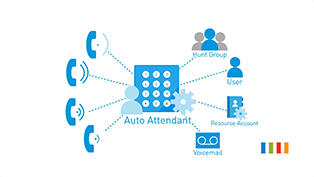
An auto attendant serves as a virtual system designed to welcome callers and guide them to their intended destination within your organization’s phone system. This automated solution seamlessly directs calls to specific extensions, eliminating the need for a live operator. Aptly termed a “virtual receptionist,” it offers an efficient call management solution.
Upon calling, the auto attendant greets individuals with a menu of options, allowing them to directly dial their desired department or person.
A pivotal aspect of the auto attendant’s functionality is its capability to manage calls beyond regular office hours. It serves as a reliable alternative when direct human interaction isn’t available, during after-hours, or amidst peak calling periods.
Furthermore, the system plays a crucial role in maintaining call flow and preventing bottlenecks. If the caller does not respond or act within a specified timeframe, the auto attendant ensures to clear the line by terminating the call.
Auto Attendant vs. IVR: Understanding the Difference
Auto attendants and IVR systems streamline calls but serve distinct business needs. IVR emerges as an evolved form of auto attendant, tailored for contact centers grappling with a high volume of calls. It’s the go-to choice for organizations entrenched in continuous customer support or outbound sales activities.
Auto attendants fit smaller businesses with manageable call volumes, sans constant outbound efforts.
A notable capability of IVR is its ability to comprehend spoken commands from callers, in addition to recognizing keypad selections. Enables extensive self-service like transactions, appointments, and accessing info without human help.
For companies looking to streamline their communication technologies into a cohesive system, unified communications offer a solution. An auto attendant is part of the broader UCaaS platform, like Towner Cloud. For advanced IVR needs, platforms like Intermedia Contact Center with Easy-IVR blend sophistication with UCaaS benefits.
Essential Features of Auto Attendants for Progressive Businesses
Innovative businesses choose unified communications with auto attendants for superior service and team collaboration. Wondering which system to select? Consider these pivotal features.
Simplicity in Setup and Customization
The value of an auto attendant diminishes if the navigation menu becomes so convoluted that callers invariably require direct human assistance to reach their desired contact. This scenario not only aggravates customers but also burdens your staff.
It’s crucial to have the capability to effortlessly craft and refine your menus to suit your customers’ needs. For instance, placing the most frequently sought-after departments or personnel prominently can streamline the calling process. Furthermore, ensuring clarity in distinguishing between departments with overlapping roles is essential to direct callers accurately.
Moreover, the incorporation of intuitive administrative interfaces enables the tailoring of menus for specific operational hours or geographical considerations, allowing for the customization of caller experiences based on the time or location of the call.
Managing High Call Volumes
It’s imperative to equip your auto attendant system and overall communications framework to manage the entirety of your incoming call traffic. A system that frequently disconnects callers can lead to customer attrition. Towner’s UCaaS offers unlimited calling capacity, ensuring all caller needs are met.
Directory Access via Name Dialing
A dial-by-name directory lets customers skip menus to quickly reach specific contacts. This feature enables callers to input the initial letters of an individual’s name, swiftly connecting them to the appropriate party.
Streamlining Communication with Multi-Format Message Delivery
Enhance efficiency for your team by enabling specific numbers to receive communications via text, email, or fax. This flexibility allows recipients to choose their preferred method of message delivery, facilitating quicker and more effective responses.
Spam Call Management
Configure your auto attendant to eliminate disruptive spam calls, enhancing productivity. You can achieve this by programming the system to automatically block calls from specific numbers or area codes. Alternatively, by requiring all callers to enter a basic keypad response upon connecting—a task spam bots cannot perform—you ensure that unauthorized calls are promptly disconnected, keeping your lines clear and your workflow uninterrupted.
Menus in Multiple Languages
Catering to a global audience? Offer multilingual menus to ensure easy access for all customers to appropriate contacts.
Start Today with Towner’s Auto Attendant
Use an auto attendant for 24/7 virtual reception, managing call flow with ease. Ready to leverage the comprehensive advantages of an auto attendant within a unified communications framework? Reach out to Towner to discover the steps to initiate your setup.
Companies are all too familiar with this harsh reality: Dial a customer’s number, only to hit a dead end. You might leave a voicemail, crossing your fingers for a callback, or persistently dial again, hoping for a response on the second (or third) attempt. It’s a colossal time drain and a source of immense frustration.
But why does this recurring ordeal unfold? The simple truth is, people harbor deep distrust towards phone calls, especially when they originate from unknown or anonymous numbers.
Customers Want You To Call:
Yes, it’s true—people still value phone calls. A staggering 75% of consumers express a preference for hearing from you when faced with complex issues or numerous questions.
However, despite your company’s genuine efforts, trust in phone calls remains severely lacking for two primary reasons: the absence of caller identification and the prevalence of scam callers.
It’s Not A YOU Problem well…maybe:
Here’s the plain truth—most individuals don’t utilize a caller ID service on their phones (less than 10 percent, to be precise). Consequently, when you make a call, your name doesn’t pop up unless the recipient has your contact information saved. Putting the onus on the customer to take proactive steps is risky, given the susceptibility of unknown numbers to spoofing. If your number falls victim to spoofing, it could tarnish perceptions of your company and brand.
When an anonymous number appears on the screen, people instinctively hesitate to answer. They’re left in the dark about the caller’s identity and intentions. Moreover, they’ve been conditioned to avoid answering calls altogether—a result of the pervasive presence of unscrupulous yet highly lucrative phone scammers.
SCAM CALLS are Big BIG Money:
Recent data from Truecaller reveals a staggering truth: from June 2020 to June 2021, Americans suffered losses nearing $30 billion due to scam calls. Remarkably, if amalgamated into a single entity, these scammers would secure the 100th spot on the prestigious Fortune 500 list—an astonishing feat.
Within the past year alone, over 59 million Americans fell victim to phone scams, enduring an average financial loss of $502 per incident. Shockingly, some individuals reported being bombarded with up to 25 scam calls daily.
Given these alarming statistics, it’s hardly surprising that people are hesitant to pick up their phones.
Trends In SCAM CALLS:
Based on insights from First Orion data, the top three prevalent scam calls in August 2021 were:
Vehicle warranty scams
Social Security scams
Mobile carrier scams
Revitalizing Trust in Phone Calls: A Call to Action for Companies
Undoubtedly, scammers bear the brunt of responsibility for eroding consumer trust. Their intrusive tactics not only annoy but also inflict financial harm on unsuspecting individuals.
Nevertheless, businesses hold the power to mend this fractured trust. Embracing branded calling solutions enables companies to reclaim control over their caller ID and call messaging. By customizing and branding each call, they can communicate their identity and purpose clearly on the recipient’s screen, thereby encouraging more responses and meaningful interactions.
Moreover, branded calling solutions offer invaluable benefits such as brand protection and enhanced spoof mitigation. By dynamically adjusting call display names based on the recipient, companies can ensure precision and personalization in their communications. The dividends are manifold—beyond mitigating spoofing, businesses stand to gain a bolstered brand reputation, strengthened client relationships, and deeper customer engagement.
It’s time to reshape the narrative around phone interactions and instill confidence in consumers once again.
Forward-thinking businesses continuously seek avenues to enhance their customer communications, which extends to upgrading contact center capabilities with innovative tools and technologies.
Illustrating this, a recent global survey conducted by Metrigy revealed that more than 80% of companies have initiated, scheduled, or are in the process of executing a transformation in customer experience. These initiatives encompass the adoption of both new and established technologies aimed at elevating agent performance and overall customer experience, thereby generating tangible business benefits.
Are you aware that Voice over Internet Protocol (VoIP) holds the potential to facilitate these objectives? In this piece, we’ll delve into how implementing a VoIP contact center solution can effectively serve your business needs.
Key Points:
VoIP-powered contact centers operate as virtual systems, enabling the management of customer communications via the internet.
Utilizing a VoIP contact center empowers you to supervise both inbound customer support and outbound sales or outreach teams effectively.
VoIP contact centers offer a suite of features designed to enhance customer experiences, bolster security measures, ensure heightened reliability, and facilitate unlimited scalability.
Understanding the Inner Workings of a VoIP Contact Center
When your business demands handling a high volume of outbound and inbound calls, a VoIP contact center is the solution. But is it the same as a traditional call center?
Not quite. Traditional call centers, rooted in physical infrastructure and in-house teams, struggle to meet modern customer experience standards. They’re limited by their reliance on a single location.
In contrast, VoIP contact centers leverage web-based operations, enabling agents and supervisors to work remotely using contact center as a service (CCaaS) software. This flexibility extends to an unlimited number of agents. With digital services, you can effortlessly set up and manage virtual lines to meet your company’s evolving needs.
The Shift to VoIP Contact Centers: Reasons for Organizational Adoption and Why You Should Consider Making the Change
A VoIP contact center consistently outshines its traditional call center counterpart. Explore further benefits today!
Elevated Customer Experience:
VoIP technology facilitates seamless integration of phone software with various media channels for omnichannel customer service. Your team gains the ability to engage customers through their preferred channels and smoothly transition between mediums as per customer preference.
For example, a customer initiating a support request via web chat with an automated bot on your website can have their query escalated to a human agent through web chat, email, or instant messaging if the issue surpasses the AI’s capabilities. In cases demanding deeper assistance, a phone or video call might be necessary. Rather than the customer dealing with disparate teams across channels and repeatedly explaining the problem, assistance unfolds as a cohesive conversation spanning channels and agents.
This feature empowers agents to resolve issues swiftly and effectively, enhancing satisfaction for both customers and employees.
Enhanced Security and Increased Reliability:
Opting for the right VoIP contact center immediately fortifies your operation’s security and reliability. By transitioning away from reliance solely on on-premise equipment, you mitigate the risks of outages and technical glitches that can paralyze a traditional call center indefinitely, leaving you at the mercy of repair timelines.
With a VoIP contact center, your hardware is housed in secure off-site data centers equipped with robust security measures and backup solutions. Even if one data center experiences an issue, your service seamlessly switches to another, ensuring uninterrupted operation. This level of redundancy translates to less than a minute of potential downtime each month.
Moreover, a cloud-based setup means your vendor maintains constant vigilance over your security. Trained personnel secure physical locations, while digital experts employ sophisticated software to safeguard your data around the clock. With this continuous protection, you can enjoy worry-free security, 24/7.
Infinite Scalability and Versatility:
As your business expands, your contact center must evolve accordingly. With a VoIP-based system, you have the flexibility to add lines, modify permissions, and activate new features as required.
Moreover, the subscription model eliminates the need to purchase a new software version to access the latest features. Cloud-based services provide instant access to cutting-edge tools, empowering you to meet evolving customer demands efficiently.
Capabilities Enhancing the Optimal VoIP Contact Center Journey:
A VoIP contact center offers a plethora of exceptional features designed to elevate productivity and enrich customer experience.
Interactive Voice Response (IVR) and Automated Call Distribution (ACD):
Efficiently establish an automated phone menu using IVR to swiftly guide callers to the relevant person or department. Subsequently, ACD intelligently distributes calls to suitable agents through intelligent routing. Customize rules to direct calls based on agent availability, skillset, and business hours.
Simple Call Recording, Monitoring, and Transfers:
Effortlessly capture and archive customer interactions for training and quality assurance purposes within your system. Supervisors can conveniently listen to agents’ calls from any location, providing coaching discreetly through the whisper function, which remains unheard by customers.
Transferring calls is now simplified; agents no longer need to navigate complex sequences of digits and extensions. Utilizing the app, agents can easily identify available team members, streamlining the process of transferring and conferencing calls.
Integration With Your CRM:
When integrated with a top-tier VoIP contact center, your customer relationship management software operates seamlessly, accelerating data collection and retrieval. This synergy facilitates faster support resolutions and enhances efficiency in closing sales calls.
Sophisticated Dashboards and Reporting Systems:
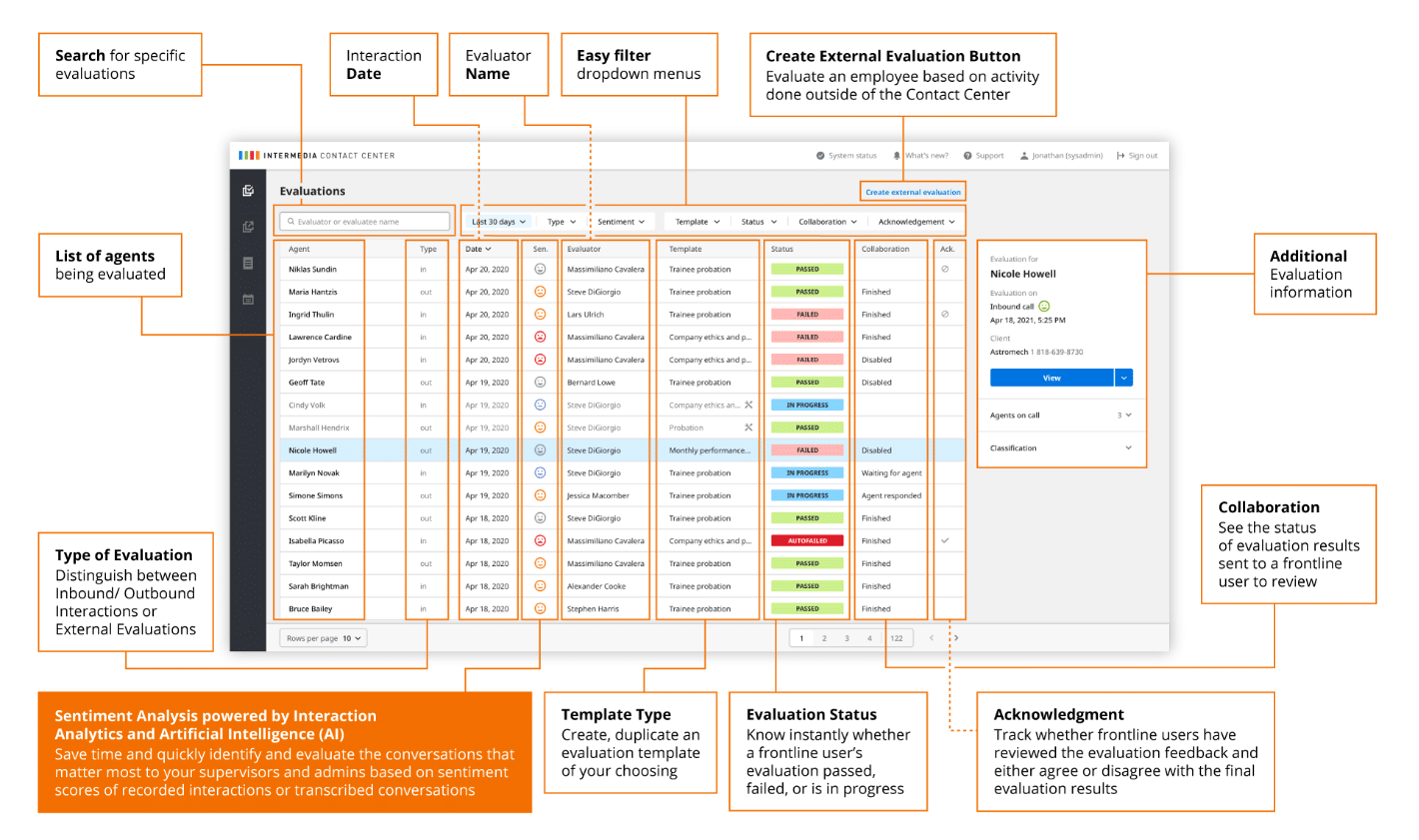
AI-powered analytics ensure you stay informed about your team’s performance at all times. For instance, you can uncover customer sentiments during calls and delve into crucial metrics like call duration, hold times, and first-contact resolution rates. Intuitive dashboards assist managers in dissecting this data to identify optimal training strategies. Clearly, your VoIP contact center diligently supports you, enabling you to deliver exceptional customer experiences and strengthen your brand.
Discover why thousands of businesses choose Towner’s VoIP Contact Center:
Now that you recognize the importance of a VoIP contact center, setting yours up is a breeze. With Towner’s assistance, the process is effortless. Simply connect with one of our team members to select your plan and features.
Athletes lose races by fractions of a second. Whether running, skiing, or swimming, the margin determines winning or losing. In the business world, tight competition exists in every industry. Competitors who are faster, efficient, and customer-focused prevail. Your business systems are vital for a competitive edge. They must operate reliably, especially your communication system. Falling behind is costly for various reasons; here are three.
Key Takeaways:
Up-to-Date Systems are Crucial: Ensure competitive edge. Accelerate time to market.
High-Performance Comparison: Like athletes, companies need new capabilities. Stay competitive and efficient.
Facilitated Communication Expedites Time-To-Market:
Enhancing Time To Market Through Seamless Communication Achieving a swift time to market requires seamless collaboration across all facets of your organization. Every team member must have the capability to connect, collaborate, and share information effortlessly, regardless of their location or the time of day.
If your communication system lags behind, your teams are unable to harness the latest features and functionalities available in the web, mobile, and desktop applications crucial for staying interconnected. Similar to elite athletes, your teams require every advantage available. Even seemingly minor advantages can have a significant impact, especially when multiplied across your entire organization.
Ensuring your communication system is up to date ensures that your teams always have access to the latest voice, messaging, video conferencing, screen sharing, and file-sharing capabilities.
Depending on how long your communication system has been without updates, bringing it up to speed could introduce new capabilities that invigorate collaborative initiatives throughout your teams.
The Cost of Lost Productivity Surpasses Your Estimate:
A survey conducted by Grammarly Business involving over 1,600 business leaders and knowledge workers revealed that 72% of the workweek is dedicated to communication and collaboration. The resulting inefficiencies incur a staggering cost exceeding $1.2 trillion annually, equating to $12,000 per employee.
However, the impact of productivity losses goes beyond monetary figures. Almost half of the respondents noted that inefficient communication and collaboration led to conflicts with colleagues and other departments, creating challenges that are harder to quantify but nonetheless detrimental to any business.
To address these issues, communication technologies with advanced features play a pivotal role in enhancing efficiency. What was considered cutting-edge not long ago is now surpassed by newer capabilities. Recognizing this, your staff expects you to provide more effective solutions.
Among the survey participants, 58% of knowledge workers and 73% of business leaders expressed the belief that better tools would make them more effective. Remarkably, 80% of business leaders are contemplating investments in AI tools.
In essence, employees are signaling that they appreciate their current tools but seek enhancements. Keeping your communication systems consistently updated with the latest features is the most straightforward way to meet this demand.
Exceptional Customer Experiences Hinge on Effective Communication:
Several statistics affirm that an enhanced customer experience directly correlates with increased business revenues. The pivotal factor lies in optimizing customer interactions with your organization across various touchpoints. Beyond contact center technology and agent services, adopting a holistic approach to the entire customer journey is essential.
As stated by customer experience consultants Temkin Group, every individual within a company contributes to determining whether it consistently provides positive or negative human or digital interactions. Your business communications system significantly influences these interactions. When assessing your current communication system, consider how customers engage with your sales team and remote employees. Also, examine how internal teams collaborate, especially in scenarios requiring customized solutions, changing delivery dates, or addressing supply chain challenges.
A deficient communication system can lead to customer disillusionment, with potential assumptions that the outdated system encountered during interactions reflects the overall state of your organization. Customers might attribute challenges in their orders or inquiries to a perceived lack of effort or care, unaware that the issues stem from outdated communication technology causing internal disconnects.
Ensure Your Communication System Doesn’t Fail You
These examples make it clear that a business risks falling behind if its communication system falters.
For those utilizing the MiVoice Business platform for communication and collaboration, there’s a straightforward way to mitigate this risk—renew or reactivate your Mitel Software Assurance subscription.
Mitel Software Assurance ensures that your MiVoice system is equipped with the latest software and features for voice, data, and video communications and collaboration. It also provides protection through the implementation of the latest security fixes to address vulnerabilities.
Moreover, the subscription offers proactive fault reporting and performance analytics, enabling the resolution of system issues before they impact your business.
This proactive approach mirrors the way high-performance athletes readily embrace new capabilities to gain a competitive edge. Similarly, high-performance companies must adopt a similar strategy.
In the fast-paced world of business, efficiency is key, and Intermedia Cloud Communications is at the forefront of innovation with the introduction of the game-changing Intermedia Elevate® AI Assistant. This powerful business productivity tool, fueled by Generative AI, is designed to revolutionize how employees access information and streamline repetitive or time-consuming tasks. What sets it apart? It’s seamlessly integrated into the Elevate desktop and mobile application, where all your business communications and collaboration converge.
Unveiling Intermedia Elevate® AI Assistant: Elevate Your Workflow
Say goodbye to cumbersome tasks and hello to a more streamlined workday. The Intermedia Elevate® AI Assistant is not just a feature; it’s a game-changer. Built on Generative AI, it empowers employees to access information effortlessly and automate tasks directly within the Elevate app. No more switching between applications – everything you need is now at your fingertips.
Versatility Redefined: The Power of AI at Your Fingertips
The Elevate AI Assistant isn’t limited to a single function; it’s a versatile tool designed to enhance various aspects of your work. From writing content and answering questions to calculating formulas, writing code, translating text, and summarizing information – the possibilities are endless. What’s more, it’s conveniently integrated into Elevate, allowing users to harness its power without leaving the app, providing a significant time-saving advantage.
Swift Access, Seamless Integration: Redefining User Experience
Intermedia understands the value of time in the business world. With the Elevate AI Assistant embedded right into the Elevate desktop and mobile application, users can access its capabilities in an instant. No more navigating to external Generative AI tools – the power of AI is now part of your daily workflow, enhancing efficiency and collaboration.
Privacy-First Approach: Your Data, Your Security
In a world where data security is paramount, Intermedia takes the lead with a privacy-first approach. Unlike other AI services, Elevate AI Assistant ensures that user data remains confidential within the business using it. This commitment to privacy sets it apart, providing a secure environment for businesses to leverage AI-driven productivity without compromising sensitive information.
Seamless Implementation, Immediate Impact: Unleash the Potential
Ready to transform your business operations? Intermedia makes it easy. Administrators on Intermedia customer accounts can activate the Elevate AI Assistant with a simple click. This streamlined implementation eliminates the hassle of individual installations and configurations, ensuring businesses can immediately unleash the potential of AI-driven productivity.
Stay Ahead with Intermedia: A Paradigm Shift in Business Productivity
In the era of digital transformation, Intermedia Elevate® AI Assistant stands out as a beacon of innovation. Elevate your workflow, redefine versatility, and ensure the security of your data – all within the familiar environment of Elevate. Embrace the future of business productivity with Intermedia, where seamless integration meets unparalleled efficiency. Discover more about Intermedia Elevate AI Assistant here. Your productivity revolution starts now!
Effective communication is vital for seamless team collaboration and successful customer outreach, making your communications system a crucial component of your company’s operations. Choosing the right technology or service is paramount to avoid potential negative impacts on your bottom line.
An increasing number of businesses, regardless of size, are embracing cloud-based calling services. With the industry’s current value surpassing $50 billion and experiencing exponential growth, it’s evident that cloud calling has become the contemporary standard for connecting with others.
Explore the reasons behind the widespread adoption of cloud-based phones by businesses and learn how these voice services enhance your organization’s connectivity and productivity. Elevate your communication strategy to the modern benchmark with cloud-based phones.
Key Points:
Embrace internet-based voice calls through cloud technology rather than traditional landlines.
Integrate various communication channels seamlessly with cloud telephony, incorporating advanced features to enhance efficiency and increase revenue.
Utilize Voice over Internet Protocol (VoIP) in cloud calling, noting that not all VoIP services are necessarily cloud-based.
Opt for a reputable provider to guarantee high-quality cloud-based calling experiences.
What’s the deal with Cloud-Based Calling (or Cloud Telephony)?
Cloud calling means using the internet for phone calls instead of traditional landlines, often referred to as “cloud calling” or “cloud telephony.” This form of unified communications as a service (UCaaS) streamlines voice communication, offering a cost-effective solution, particularly for businesses. With UCaaS, all your communication channels, including voice, video, chat, and messaging, seamlessly come together under one service, simplifying billing through a single vendor.
How does it work?
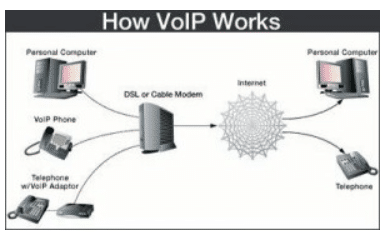
Cloud calling utilizes Voice over Internet Protocol (VoIP), converting audio signals from your internet phone or smart device into data packets. These packets are then transmitted via the internet to your provider, who directs the call to the intended recipient.
This setup enables you to make calls to other VoIP users, provided their devices can process these data packets. Additionally, your provider facilitates calls to traditional landline phone users by converting the data packets back into audio signals.
Operating through a cloud private branch exchange, cloud-based calling eliminates the need for an on-premise PBX system. Instead, your provider takes care of security and maintenance on its own site.
Why Should YOU be using Cloud Based Phones?
Cloud telephony enables small businesses to enjoy the same robust communication advantages as large enterprises.
Security
Leverage cloud-based calling platforms to safeguard both your and your customers’ data across various aspects. Trust in cutting-edge encryption and security management for voice and all other communication channels.
Potential for expansion
Unlike a traditional on-premise PBX, your cloud calling system allows for instant scalability through your administrative dashboard. Upgrades and installations take mere moments, not months. This enables you to swiftly adapt to customer demand and boost your revenue.
Flexibility
Keep a strong connection with remote teams through UCaaS. With an internet-connected device, anyone can communicate securely within your system, enabling you to tap into a global talent pool without sacrificing collaboration quality.
Cost Savings
Cloud-based calling helps you cut costs associated with office space, equipment, and maintenance required for an in-office PBX. Additionally, internet calling offers more affordable rates for long-distance and international calls.
Sustainable Functionality
Access the most up-to-date features effortlessly through a cloud phone system. Your provider promptly installs and oversees the latest integrations with productivity software, ensuring you stay competitive in the market and maintain peak performance.
User Friendly
A robust communications system shouldn’t be unnecessarily complicated. Connecting with others through UCaaS is straightforward with a user-friendly interface, making calls and storing client details a breeze.
Easy Installation
Like upgrades, deploying your cloud-based calling platform is also a straightforward process. With high-speed internet, you can be up and running in just a matter of days. Your provider will collaborate with you to ensure a quick and efficient setup.
Reliability and Resiliency
Communication downtime becomes expensive rapidly. Cloud calling ensures 99.999% uptime, allowing for a maximum downtime of only 26 seconds per month. Rarely, if ever, are you unable to connect with your customers or team.
Moreover, business continuity is less affected by outages and disasters. You can regain connectivity from any location with internet access.
Advanced Management
Online dashboards within a cloud system empower managers and supervisors to monitor operations and engage with workers. Advanced artificial intelligence programs provide deeper insights into customer interactions and facilitate workflow automation.
Cloud v. VoIP
VoIP is the technology that facilitates voice calling over the internet, serving as the foundation for cloud-based calling. However, it’s essential to note that not all VoIP services operate in the cloud.
Furthermore, a VoIP service may provide only basic calling and messaging functionalities. In contrast, cloud telephony encompasses VoIP capabilities along with a variety of other features designed to enhance your business productivity.
How do you pick a Cloud Partner?
You’ll come across cloud-based calling vendors of different qualities. As you navigate through various UCaaS providers, keep an eye out for the following crucial attributes:
Strong testimonials and positive reviews from clients.
A transparent service level agreement and top-notch customer support.
Worry-free SOC 2-audited security and regulatory compliance.
Adequate infrastructure and integrations to manage all your communications.
Fortunately, Towner meets and exceeds these requirements. Our Worry-Free Experience empowers you to concentrate on adding value to your business rather than dealing with issues related to your phone service.