What’s the benefit of a Mobile Workforce? Some people will say employee morale. Others will say shorter commutes. Some will even tout health benefits. And those are all true. But they don’t make a business case.
What does?
At Towner Communications, we know going mobile saves your business time and money–increasing productivity and efficiently, reducing costs, etc. And even though much of the literature on the subject today focuses on employee benefits and soft advantages, there are plenty of concrete business reasons to embrace mobilizing your enterprise.
So we rolled up our sleeves, did some research and put together this infographic so you have the full picture of the true business benefits of a mobile enterprise. From ensuring business continuity to reducing communications latency to saving on employee compensation, here are eight reasons to untether your business.
If video killed the radio star, jurors would agree that mobility killed the traditional workday. Mobility turned your once immobile desktop computer into a 13-inch laptop you can carry home with you, and spawned miniature tablets and ever-present, pocket-sized smartphones. Your mobile devices coupled with cloud technology give you instant and constant access to your virtual cubicle.
Increased mobility means work is no longer a place you go; it’s a thing you do.
If the concept above made you cringe in fear of a vacation riddled with email notifications or turn green with envy at France’s developing after-work email regulations, you might want to re-evaluate your perspective. Studies continue to uncover the benefits of implementing an enterprise mobility strategy – for both your employees and your business’s bottom line.
Four ways to profit from your mobility strategy with unified communications and collaboration (UCC)
1) Boost employee satisfaction
36% of employees stated they would choose flexible working options over a pay raise. Thirty-seven percent even said they would take a pay cut in order to work from home.
2) Increase productivity
Industry big wigs like Best Buy, British Telecom and Dow Chemical have reported that teleworkers are 35-40 percent more productive than those without flexible working options. Teleworkers also often work longer hours than their office-bound coworkers.
3) Recruit top talent in a competitive market
Studies show tech-savvy millennials are more difficult to recruit, but are particularly attracted to flexible work options. UCCalso empowers businesses to hire the best employees for the job no matter where they’re located geographically, and enable them to collaborate with their coworkers as easily as if they were in the office.
4) Eliminate unnecessary service disruptions
Unscheduled absences (like sick days) cost US employers roughly $1,800 per employee each year. Global Workplace Analytics reports that mobile-enabled workers typically continue to work remotely when they’re sick, avoiding both negatively impacting business operations and spreading illness throughout the office. Additionally, flexible work arrangements allow workers to run errands or take personal appointments without losing a full day of work.
Taking a mobile-first approach to reap the benefits of UCC
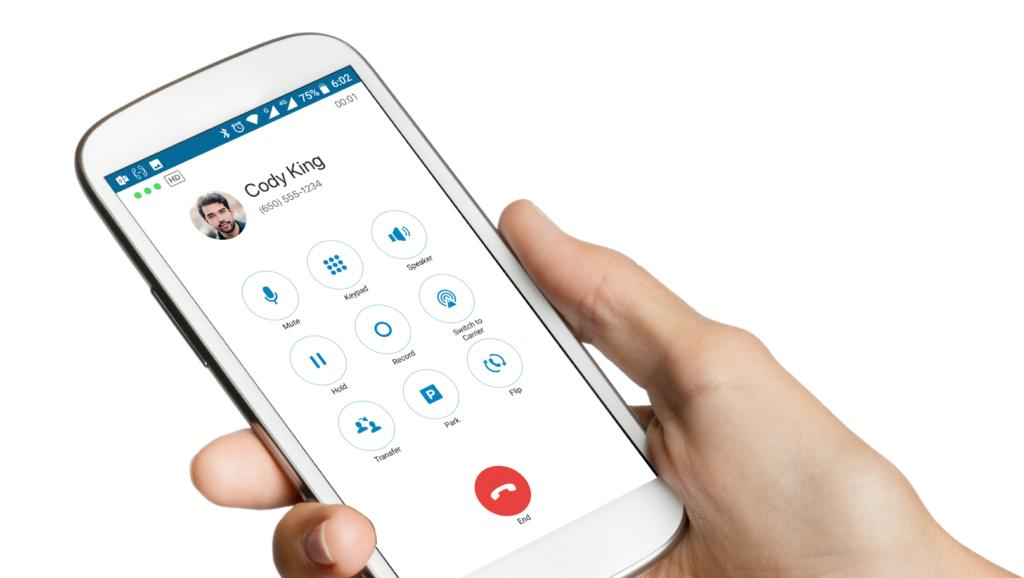
Since more and more employees are on the move or working remotely, it’s important to provide them with an in-office experience no matter where their days take them. That means rather than mimicking desktop design and functionality, mobile clients should be built from the ground up to work natively on mobile devices.
It should also be extremely easy for employees to get up and running on their mobile devices through automated provisioning, which will save time and money for both mobile workers and for your help desk.