Mitel Phone Systems in 2026: Products, Support and Outlook
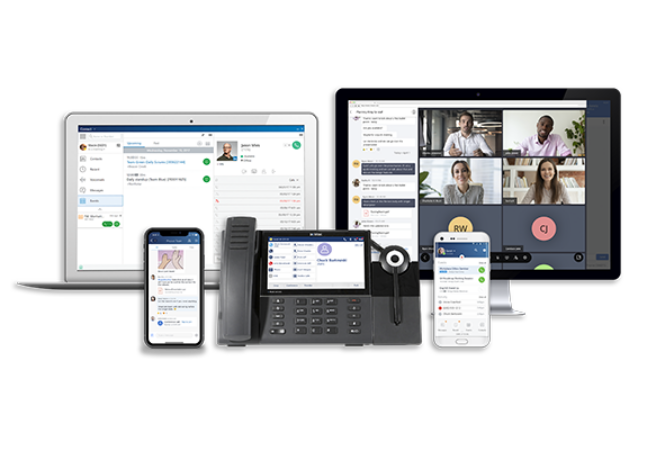
Mitel remains an active business communications provider in 2026, with phone systems and collaboration platforms that support on-premises, private cloud and hybrid environments.
For organizations already using Mitel, the important question is not whether every Mitel system is disappearing. It is which platform and software version they operate, where that product sits in its lifecycle and how it fits Mitel’s current hybrid communications direction.
Mitel’s established portfolio continues to include platforms such as MiVoice Business and MiCollab. In 2026, the company also announced Mitel WX, Mitel CX, Mitel Workflow Studio and Mitel Edge as part of a broader strategy built around hybrid communications, governed AI, connected workflows and local resilience.
This guide explains what Mitel offers in 2026, which products remain relevant, how lifecycle announcements affect existing customers and when organizations should maintain, modernize or replace a Mitel phone system.





Mitel at a Glance (Quick Answers)
Is Mitel still in business in 2026?
Yes. Mitel remains an active global business communications provider. Its 2026 strategy continues to emphasize hybrid communications, local control, resilience, AI-enabled workflows and modernization without forcing every customer into the same deployment model.
Are Mitel phone systems being phased out?
No—not as a complete product category. Individual Mitel products, versions and services have different lifecycle dates. Organizations should review the specific platform, software release, hardware and licensing they currently use rather than treating every Mitel system as having the same status.
Is MiVoice Business still a current Mitel platform?
Yes. MiVoice Business remains part of Mitel’s business communications portfolio and continues to support organizations that require enterprise voice, local survivability and controlled deployment options.
What is happening to MiVoice Connect?
MiVoice Connect entered Mitel’s Product Lifecycle Management Plan. Mitel currently lists December 31, 2029, as the end of technical support and identifies MiVoice Business as an upgrade option for MiVoice Connect customers.
Does Mitel support cloud and hybrid communications?
Yes. Mitel supports communications across on-premises, dedicated-instance, private-cloud, public-cloud and hybrid environments. The appropriate model depends on operational needs, compliance, resilience, integrations and existing investments.
Can Mitel work with Microsoft Teams?
Yes. Mitel offers Microsoft Teams integration options that allow organizations to combine Teams collaboration with Mitel-supported voice and communications environments.
What is new in Mitel’s 2026 portfolio?
Mitel’s announced 2026 direction includes Mitel WX for workforce communications, Mitel CX for customer experience, Mitel Workflow Studio for workflow automation and Mitel Edge for local control and resilience.
Who is Mitel best suited for?
Mitel commonly fits organizations with complex voice requirements, multiple locations, regulated workflows, local-survivability needs or a preference for phased modernization. These environments often include healthcare, education, government, finance, manufacturing and hospitality.
What Is Mitel and What Does the Company Do?
Mitel is a unified communications (UC) and telephony platform provider focused in voice‑centric business communications. Unlike cloud‑only providers, Mitel has historically focused on reliability, control, and long‑term system stability.
At its core, Mitel delivers:
- Enterprise phone systems (PBX)
- Unified communications and collaboration tools
- Contact center solutions
- Hybrid and cloud voice architectures
This approach has made Mitel especially popular with organizations that require high availability, regulatory compliance, and granular control over their communications infrastructure.
Is Mitel Still in Business? Addressing the Biggest Questions Head‑On
Yes — Mitel is still very much in business. However, confusion often stems from the company’s evolution through acquisitions, restructuring, and product consolidation.
Mitel’s strategy over the past several years has focused on:
- Streamlining its product portfolio
- Supporting long‑term customers through gradual modernization
- Enabling hybrid transitions rather than forcing abrupt cloud migrations
For organizations already invested in Mitel, this means continuity — not abandonment — when supported by the right partner.
Who Owns Mitel and How the Company Has Evolved
Mitel has changed ownership and structure multiple times throughout its history, including the acquisitions of ShoreTel and Unify. These moves grew Mitel’s reach while also increasing the complexity of its ecosystem.
Today, Mitel operates as a private company with a focus on serving enterprise and mid‑market customers who depend on reliability over trend‑driven feature churn.
Mitel Phone Systems and Communications Products in 2026
MiVoice Business
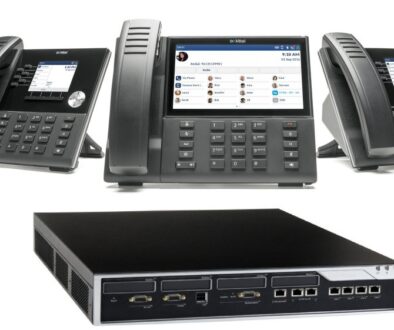
MiVoice Business is Mitel’s enterprise call-control platform for organizations that require reliable voice, multi-site capabilities, local survivability and controlled deployment options. It can support on-premises, private-cloud and hybrid communications strategies.
MiCollab
MiCollab adds calling, messaging, presence, mobility and collaboration capabilities to supported Mitel environments. It gives employees access to business communications across desktop and mobile devices.
Mitel WX
Mitel introduced Mitel WX as a workforce communications experience that brings calling, meetings, messaging and industry-specific workflows together across hybrid environments.
Mitel CX
Mitel CX is the company’s customer-experience direction for routing, agent assistance, journey analytics and policy-aware customer interactions. Mitel has positioned it to work with its broader workforce communications and workflow portfolio.
Mitel Workflow Studio
Mitel Workflow Studio is a low-code and no-code orchestration layer for connecting communications with business workflows. It can support routing logic, notifications, escalations and data-driven actions across communications and business systems.
Mitel Edge
Mitel Edge extends communications and workflow capabilities into local environments where survivability, latency, privacy and operational control matter. It is designed to maintain critical local functions while participating in a broader hybrid architecture.
On-Premises, Cloud or Hybrid Deployment
Mitel’s 2026 strategy is not limited to one deployment model. Organizations may use on-premises systems, dedicated instances, private cloud, public cloud or combinations of these environments. The right architecture depends on business continuity, compliance, integrations, connectivity and the operational control the organization requires.
Is Mitel End of Life? The Answer Depends on the Product
Mitel is not one product with one end-of-life date. Each platform, software release, device and cloud service follows its own lifecycle.
A Mitel environment may include:
– Current products receiving active development, maintenance and security updates
– Products operating under a published lifecycle or maintenance plan
– Software releases that require an upgrade to remain supported
– Legacy hardware or platforms approaching the end of technical support
– Third-party integrations with separate compatibility and support timelines
For example, MiVoice Business remains part of Mitel’s current communications portfolio, while MiVoice Connect is under a lifecycle plan with technical support scheduled to end on December 31, 2029.
An end-of-life or end-of-support announcement does not always require an immediate system replacement, but it should trigger a formal review.
Organizations need to understand:
– The exact Mitel platform and software version in use
– Published support and lifecycle dates
– Hardware age and replacement availability
– Licensing and software-assurance status
– Security and operating-system dependencies
– Integrations tied to specific software releases
– Local-survivability and business-continuity requirements
– The time and budget required for an upgrade or migration
A system may continue to function after a lifecycle milestone, but continued operation is not the same as receiving vendor support, security updates or guaranteed compatibility. Organizations should evaluate those risks with a qualified Mitel partner and build a timeline before support options become limited.
Mitel in 2026: Platform Reality vs Assumptions
Many organizations assume Mitel is either fully legacy or being replaced wholesale by cloud-only platforms. In practice, this is rarely accurate.
In real-world deployments, Mitel in 2026 is most commonly:
- Anchoring enterprise voice reliability while collaboration layers evolve
- Supporting hybrid architectures where cloud services coexist with on-prem systems
- Retained intentionally in environments where survivability, compliance, or latency matter more than feature velocity
Where organizations run into trouble is not platform viability — it is assuming that modernization must be binary.
Organizations succeed with Mitel in 2026 when they take a phased, deliberate approach aligned to operational risk tolerance rather than marketing trends.
Operational Considerations Most Mitel Buyers Don’t Discover Until Too Late
Mitel environments behave differently than cloud-native platforms, especially at scale.
Common operational realities include:
- Properly designed Mitel deployments can maintain certain local calling functions during a WAN outage. Actual survivability depends on the platform, system architecture, gateways, carrier connectivity and configuration.
- Multi-site dial plan complexity, particularly after mergers, acquisitions, or organic growth
- Legacy handset dependencies, which can complicate rapid transitions
- Version skew across locations, increasing management overhead
- Integration friction when cloud applications expect uniform, API-first environments
These are not flaws — they are characteristics. Understanding them early prevents rushed decisions later.
Mitel Integrations: Microsoft Teams, Zoom and Hybrid Models
Mitel environments don’t have to be all‑or‑nothing.
Many organizations successfully deploy:
- Mitel for enterprise voice reliability
- Microsoft Teams for collaboration
- Cloud services for specific use cases
Hybrid models allow businesses to modernize without disrupting mission‑critical voice workflows.

Why Many Midwest Organizations Still Rely on Mitel
Across the Midwest — particularly in manufacturing, healthcare, education, and municipal environments — Mitel remains a practical choice.
Common factors include:
- Multi‑site campuses
- Long hardware lifecycles
- Regulatory oversight
- Need for local survivability during outages
These realities often make cloud‑only platforms insufficient on their own.
Representative Scenario: Modernizing Mitel Across Multiple Locations
The following representative scenario illustrates how a multi-location organization might modernize communications while retaining a stable Mitel voice environment. It is not presented as a specific Towner customer case study.
A multi-site organization may need to improve collaboration while maintaining reliable voice services across locations with different connectivity, workflows and operational requirements.
Common considerations include:
– Existing Mitel systems integrated into daily operations
– Different software or hardware versions across locations
– Sites that require local call survivability
– Regulatory or records-retention requirements
– Limited tolerance for disruption during a migration
– Collaboration tools that need to coexist with enterprise voice
Instead of replacing every system at once, the organization may retain Mitel for core telephony while adding modern collaboration tools, updating selected sites and developing a phased roadmap for the remaining environment.
A phased approach can help the organization:
– Prioritize locations with the greatest operational risk
– Maintain critical voice workflows during modernization
– Coordinate software, hardware and integration changes
– Spread project costs across a planned timeline
– Evaluate cloud, on-premises and hybrid options by location
This scenario reflects a common Mitel planning principle: modernization does not have to be an all-or-nothing decision.
When Mitel Is Not the Right Choice
Despite its strengths, Mitel is not universally appropriate.
Mitel is not the best fit for organizations that:
- Require instant, cloud-only deployment with minimal configuration
- Lack internal IT or partner support resources
- Prioritize rapid feature experimentation over stability
- Are unwilling to manage hybrid environments
Acknowledging these limitations is essential to making defensible technology decisions.
Is Mitel Right for Your Organization Today?
Mitel aligns best with organizations that:
- Treat communications as mission-critical infrastructure
- Require high availability and predictable performance
- Operate under regulatory, compliance, or uptime constraints
- Value phased modernization over forced transitions
The question in 2026 is not whether Mitel is modern or legacy — it is whether the platform aligns with how your organization manages risk.
What to Look for in a Mitel Partner
Success with Mitel depends heavily on the partner supporting it.
Key qualities include:
- Deep experience with legacy and modern environments
- Proven migration planning expertise
- Understanding of regulatory and uptime requirements
- Long‑term support mindset
The platform matters — but guidance matters more.
Questions to Ask Before Making Any Changes to Your Mitel System
- Which platforms, versions, and licenses does your organization currently deploy?
- Which locations require local survivability?
- What integrations are business-critical today?
- What operational risks exist during any migration?
Organizations consistently discover that the greatest risks are not technical — they are planning-related.
Common Questions About Mitel in 2026
Who This Mitel Guide Is For — and Who It Is Not
This guide supports organizations making long-term communications decisions where reliability, compliance, and operational continuity matter.
This guide does not serve teams seeking the fastest possible cloud deployment with minimal infrastructure responsibility.
Understanding that distinction is often the most important decision of all.
Last reviewed July 31, 2026, using publicly available Mitel portfolio and product-lifecycle information.
Mitel Readiness & Risk Assessment
Use this assessment to evaluate the readiness, risk exposure, and modernization options of your current Mitel environment. Designed for IT leadership and operations teams managing complex or regulated communications systems.